
The soil is carefully cleaned of impurities and stones. In addition, all weeds are removed, rooted weeds are dug with the shovel. Now the rake is taken by hand and the earth is carefully worked.
Then the soil is again smoothed and the soil is distributed over it.
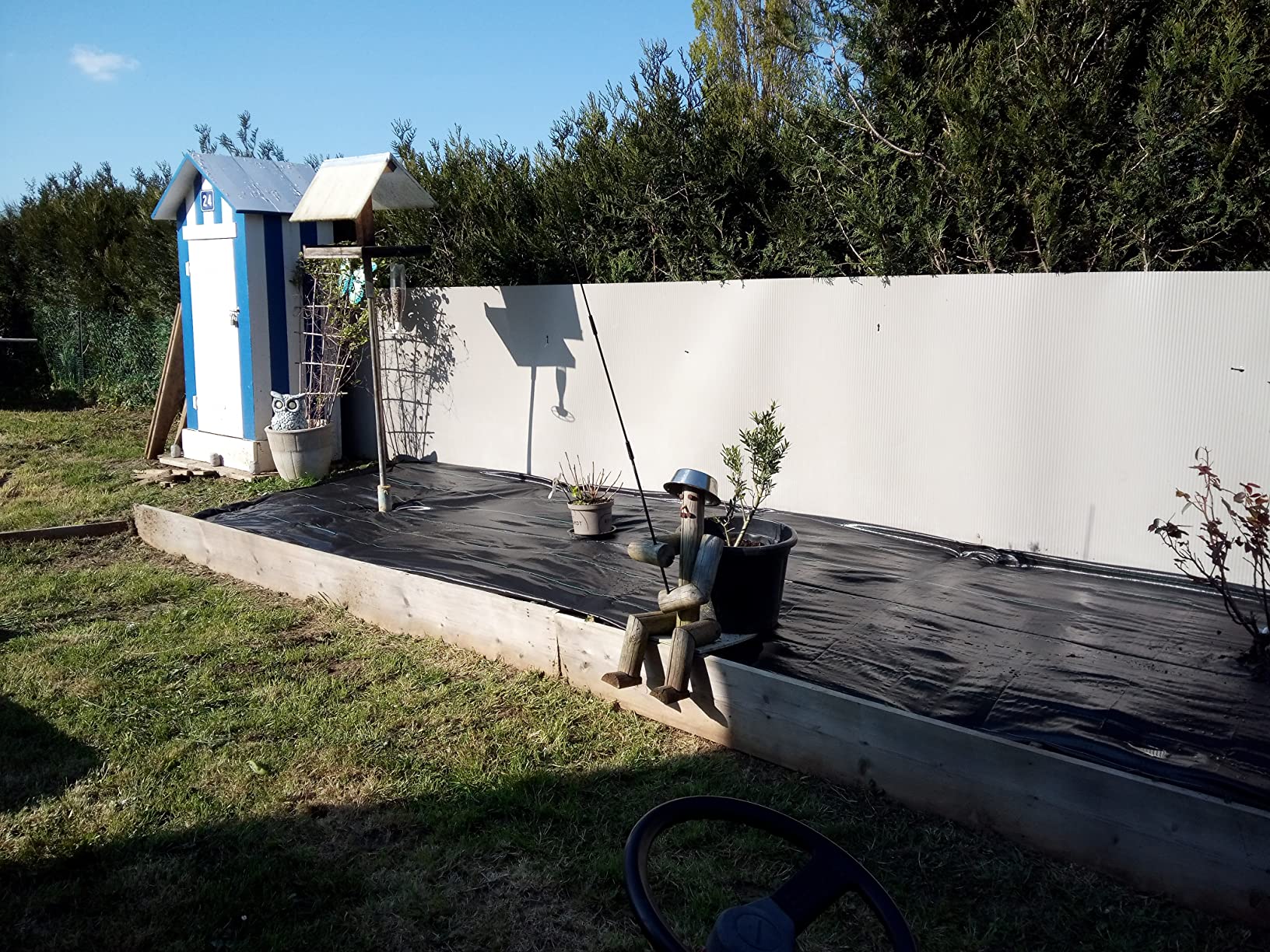
The landscape fabric is then spread on the floor and cut with scissors. All places where weeds grow should be avoided.
On the edges, it can be very annoying that the canvas is too tight and weeds move on the edges.
With the help of plastic anchors, the weed barrier can be fixed and thus protected against slipping.
In places where strong weed growth is expected, it is possible to lay the weed mat twice for added safety.
Do not spend time between the preparation of the soil and the laying of the anti-weed mat, because otherwise the remnants of weeds present in the soil will germinate again.
The plants are first positioned on the weed web in the places where they will be planted later. There, using a carpet knife or scissors, the landscape fabric is cut with an X, dig the planting hole and the plant is placed in the ground. The four corners of the incision are now placed as tightly as possible around the planting stem so that weeds cannot grow there. Finally, the anti-weed canvas is covered with soil, bark or decorative gravel. This not only looks very neat, but protects the underlying fmat from direct sunlight. The durability of the ground cover is critical whether it is covered with material or in direct sunlight.
Post time: Jun-11-2026